The Mountain Journal
The Himalayan Atlas
A Geography of Living Things
An intimate account of the flora, fauna and ecological intricacies of the Himalayas.

There is a tendency to measure the Himalayas in superlatives. The highest summits, the deepest valleys, the oldest passages between distant worlds. Their grandeur is indisputable, but altitude alone tells us remarkably little about the life these mountains contain.
For that, one must look closer.
Consider a flowering plant growing among stones at the edge of an alpine meadow. Its existence depends upon a particular arrangement of circumstances: the retreat of seasonal snow, the warmth retained by the ground, the availability of moisture, and a growing season that may be brief enough to make every favourable day consequential. A few hundred metres below, another botanical community occupies a different climate altogether.
The Himalayas are a geography of such distinctions.

Across their immense length, forests give way to grasslands, orchards occupy cultivated slopes, and cold deserts emerge beyond the reach of substantial monsoon rainfall. The eastern mountains receive climatic influences quite unlike those experienced in the western ranges. Even neighbouring valleys may differ in vegetation, flowering periods, and the animals they support.

What appears from a distance to be one continuous mountain landscape is, in ecological terms, an extraordinary assembly of worlds.
And within these worlds, nothing exists entirely in isolation.

A flowering tree offers pollen and nectar to visiting insects. Some of those visitors transfer pollen between flowers, contributing to reproduction and, in certain cultivated species, the eventual development of fruit.
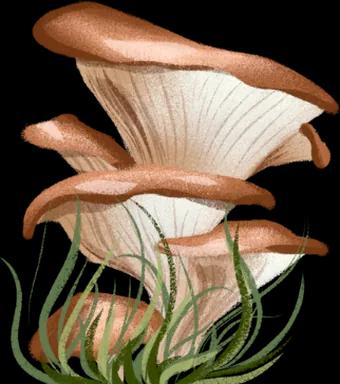
Fallen leaves enter the soil, where fungi, bacteria, and invertebrates participate in decomposition and nutrient cycling.

Forest vegetation influences the movement of water through the landscape, while birds and mammals contribute to processes such as seed dispersal.
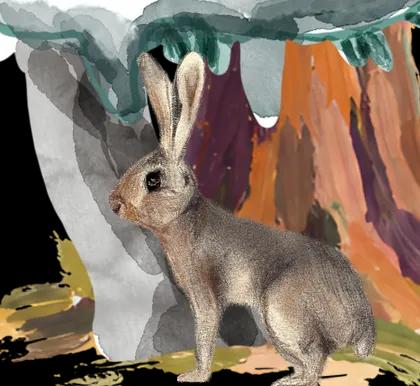
These relationships are not invariably harmonious, nor are they fixed. They are shaped by competition, cooperation, disturbance, seasonal opportunity, and the persistent demands of survival.
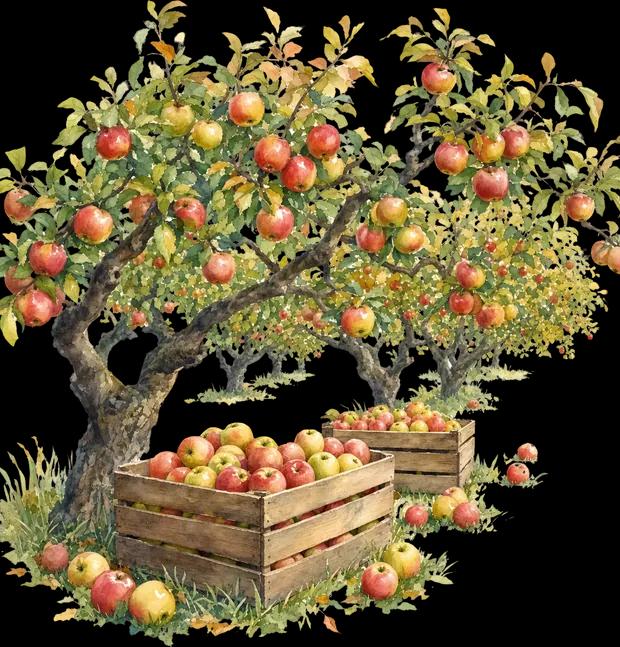
The cultivated Himalayas introduce another dimension to this natural history. An orchard in spring, a terraced field after rain, or a village garden planted with flowering herbs is more than a picturesque expression of mountain life.
Each is a place where human decisions meet biological processes. Cultivation alters the landscape, but its success remains intimately connected to soil, climate, water, and the organisms that inhabit it.
There is considerable knowledge in these everyday encounters with nature. Generations of growers have observed the behaviour of seasons, the suitability of particular slopes, and the changing fortunes of their crops. Such experience deserves attention alongside the findings of botanical and ecological research, without confusing inherited practice with experimentally established fact.

The wild landscape, meanwhile, continues according to rhythms that do not necessarily accommodate human expectations. Flowers may appear later after prolonged snow cover. Pollinator activity varies with weather and habitat. Forest communities change across altitude and exposure. Species that seem abundant in one locality may be scarce elsewhere.
To understand these patterns requires more than admiration. It requires the patience to distinguish appearance from explanation.
That distinction becomes especially important as Himalayan environments change. Shifts in temperature, precipitation, snow cover, and land use can alter the conditions upon which plants and animals depend. The consequences are seldom uniform. What benefits one species may disadvantage another; what appears to be an extended growing season may also introduce new ecological pressures.
The mountains have never been motionless. Their natural history is one of continual adjustment, shaped by geological processes, climatic variation, biological evolution, and human presence.
Perhaps this is what makes the Himalayas so compelling to a naturalist. Their significance lies not only in the extraordinary species they harbour, but in the relationships through which ordinary life becomes possible under extraordinary conditions.
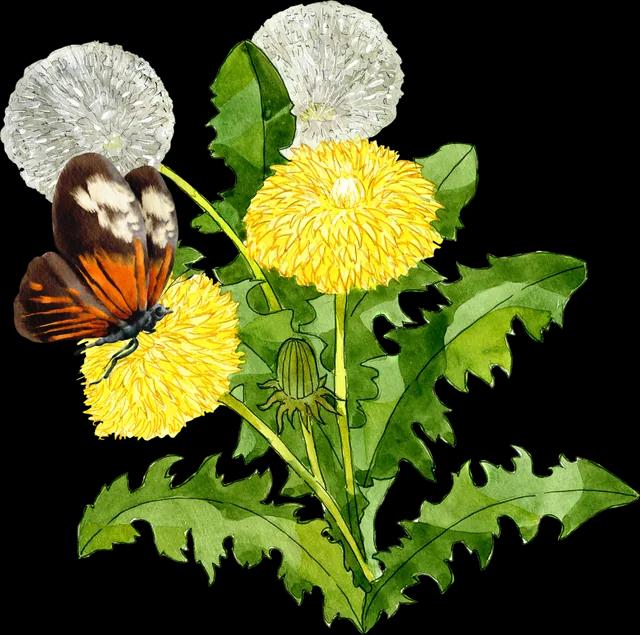
A meadow is a record of climate and adaptation. An orchard is an intersection of cultivation and ecology. A forest is a community with histories extending far beyond the lives of its individual trees.
And a mountain, examined closely enough, ceases to be merely a mountain.
It becomes a world.